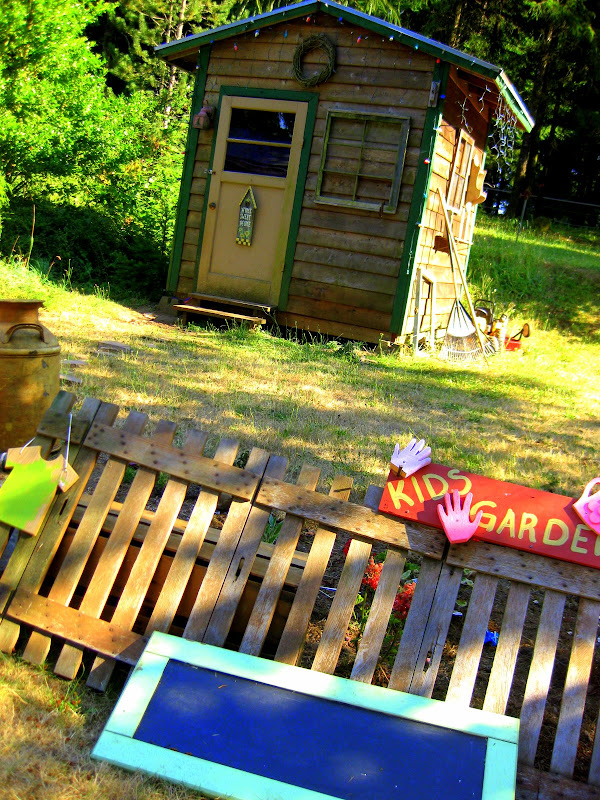
This article below is in the top ten most popular articles today in the
New York Times. Could it be that the general populace are starting to think about where their food comes from?
The New York TimesAugust 24, 2009
Op-Ed Contributor
A Farm on Every FloorBy DICKSON D. DESPOMMIER
IF climate change and population growth progress at their current pace, in roughly 50 years farming as we know it will no longer exist. This means that the majority of people could soon be without enough food or water. But there is a solution that is surprisingly within reach: Move most farming into cities, and grow crops in tall, specially constructed buildings. It’s called vertical farming.
The floods and droughts that have come with climate change are wreaking havoc on traditional farmland. Three recent floods (in 1993, 2007 and 2008) cost the United States billions of dollars in lost crops, with even more devastating losses in topsoil. Changes in rain patterns and temperature could diminish India’s agricultural output by 30 percent by the end of the century.

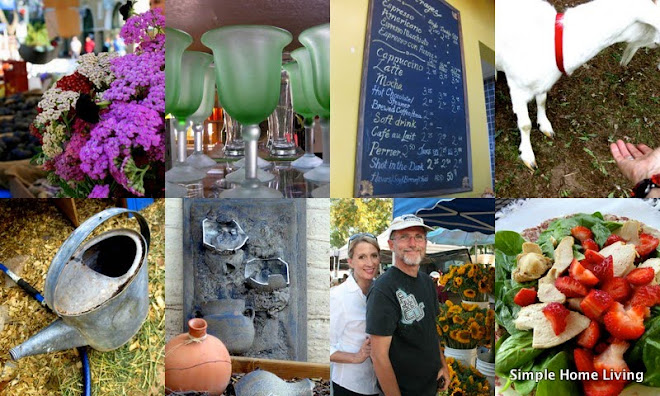
Fresh from Debbie's organic farm - Northwest Organic Farms
What’s more, population increases will soon cause our farmers to run out of land. The amount of arable land per person decreased from about an acre in 1970 to roughly half an acre in 2000 and is projected to decline to about a third of an acre by 2050, according to the United Nations. With billions more people on the way, before we know it the traditional soil-based farming model developed over the last 12,000 years will no longer be a sustainable option.
Irrigation now claims some 70 percent of the fresh water that we use. After applying this water to crops, the excess agricultural runoff, contaminated with silt, pesticides, herbicides and fertilizers, is unfit for reuse. The developed world must find new agricultural approaches before the world’s hungriest come knocking on its door for a glass of clean water and a plate of disease-free rice and beans.
 Debbie grows wonderful heirlooms and other organics here.
Imagine a farm right in the middle of a major city. Food production would take advantage of hydroponic and aeroponic technologies. Both methods are soil-free. Hydroponics allows us to grow plants in a water-and-nutrient solution, while aeroponics grows them in a nutrient-laden mist. These methods use far less water than conventional cultivation techniques, in some cases as much as 90 percent less.
Now apply the vertical farm concept to countries that are water-challenged — the Middle East readily comes to mind — and suddenly things look less hopeless. For this reason the world’s very first vertical farm may be established there, although the idea has garnered considerable interest from architects and governments all over the world.
 This is what I call be -a-u-ti -ful.
Vertical farms are now feasible, in large part because of a robust global greenhouse initiative that has enjoyed considerable commercial success over the last 10 years. (Disclosure: I’ve started a business to build vertical farms.) There is a rising consumer demand for locally grown vegetables and fruits, as well as intense urban-farming activity in cities throughout the United States. Vertical farms would not only revolutionize and improve urban life but also revitalize land that was damaged by traditional farming. For every indoor acre farmed, some 10 to 20 outdoor acres of farmland could be allowed to return to their original ecological state (mostly hardwood forest). Abandoned farms do this free of charge, with no human help required.
A vertical farm would behave like a functional ecosystem, in which waste was recycled and the water used in hydroponics and aeroponics was recaptured by dehumidification and used over and over again. The technologies needed to create a vertical farm are currently being used in controlled-environment agriculture facilities but have not been integrated into a seamless source of food production in urban high-rise buildings.
Growing what's best and right and learning to give thanks and look up in the process.
Such buildings, by the way, are not the only structures that could house vertical farms. Farms of various dimensions and crop yields could be built into a variety of urban settings — from schools, restaurants and hospitals to the upper floors of apartment complexes. By supplying a continuous quantity of fresh vegetables and fruits to city dwellers, these farms would help combat health problems, like Type II diabetes and obesity, that arise in part from the lack of quality produce in our diet.
The list of benefits is long. Vertical farms would produce crops year-round that contain no agro-chemicals. Fish and poultry could also be raised indoors. The farms would greatly reduce fossil-fuel use and greenhouse-gas emissions, since they would eliminate the need for heavy farm machinery and trucks that deliver food from farm to fork. (Wouldn’t it be great if everything on your plate came from around the corner, rather than from hundreds to thousands of miles away?)
And, what would a happen if we raised our kids on a farm? Think things might change?
Vertical farming could finally put an end to agricultural runoff, a major source of water pollution. Crops would never again be destroyed by floods or droughts. New employment opportunities for vertical farm managers and workers would abound, and abandoned city properties would become productive once again.
Vertical farms would also make cities more pleasant places to live. The structures themselves would be things of beauty and grace. In order to allow plants to capture passive sunlight, walls and ceilings would be completely transparent. So from a distance, it would look as if there were gardens suspended in space.
City dwellers would also be able to breathe easier — quite literally. Vertical farms would bring a great concentration of plants into cities. These plants would absorb carbon dioxide produced by automobile emissions and give off oxygen in return. So imagine you wanted to build the first vertical farm and put it in New York City. What would it take? We have the technology — now we need money, political will and, of course, proof that this concept can work. That’s why a prototype would be a good place to start. I estimate that constructing a five-story farm, taking up one-eighth of a square city block, would cost $20 million to $30 million. Part of the financing should come from the city government, as a vertical farm would go a long way toward achieving Mayor Michael Bloomberg’s goal of a green New York City by 2030. Manhattan Borough President Scott Stringer has already expressed interest in having a vertical farm in the city. City officials should be interested. If a farm is located where the public can easily visit it, the iconic building could generate significant tourist dollars, on top of revenue from the sales of its produce.

And what about our daughters?
But most of the financing should come from private sources, including groups controlling venture-capital funds. The real money would flow once entrepreneurs and clean-tech investors realize how much profit there is to be made in urban farming. Imagine a farm in which crop production is not limited by seasons or adverse weather events. Sales could be made in advance because crop-production levels could be guaranteed, thanks to the predictable nature of indoor agriculture. An actual indoor farm developed at Cornell University growing hydroponic lettuce was able to produce as many as 68 heads per square foot per year. At a retail price in New York of up to $2.50 a head for hydroponic lettuce, you can easily do the math and project profitability for other similar crops.
Did you know that goats milk is the worlds must "drunk" milk? Visit
Annie'sWhen people ask me why the world still does not have a single vertical farm, I just raise my eyebrows and shrug my shoulders. Perhaps people just need to see proof that farms can grow several stories high. As soon as the first city takes that leap of faith, the world’s first vertical farm could be less than a year away from coming to the aid of a hungry, thirsty world. Not a moment too soon.
Dickson D. Despommier, a professor of public health at Columbia University, is writing a book about vertical farms.I'd love to hear your thoughts!

A Farm on Every Floor
http://lylahledner.blogspot.com/2009/08/farm-on-every-floor.html

 Labels:
From my kitchen
Labels:
From my kitchen


 Cote de Texas blogger, designer Joni writes ~ Number four on the list of the Top Ten Design Elements that I love in a house are curtains. After linen, slipcovers, and seagrass – curtains bring so much to a room that they should always be considered when designing a house. Curtains add romance, texture and softness. They can also add jolts of needed color. They bring coziness and warmth to a room or sometimes they add a beachy breeziness. Curtains are tricky though – they need to be done right, executed . . .


